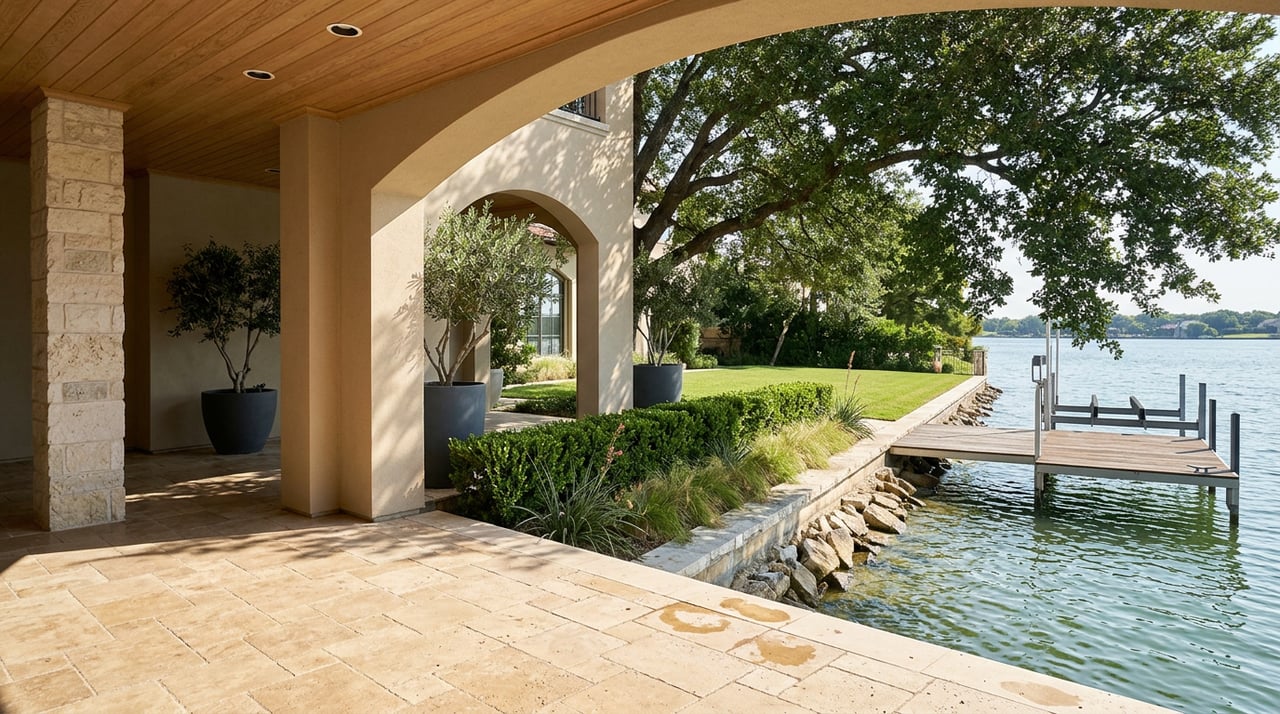
Key Considerations When Buying a Home on Lake LBJ
March 24, 2026
March 24, 2026
Shopping for a Lake LBJ home should feel exciting, not overwhelming. Yet terms like “constant level,” dock permits, and dredging can get confusing fast. You want a property that fits your lifestyle and holds value without surprise costs or red tape. This guide breaks down what matters most on Lake LBJ so you can buy with confidence. Let’s dive in.
Marketing often calls Lake LBJ a constant-level lake, but that description is relative. The Lower Colorado River Authority (LCRA) manages LBJ as a pass-through lake in the Highland Lakes system. LCRA notes that none of the Highland Lakes are truly constant level, and water levels can fluctuate, especially during flood events or operational changes. You can review LCRA’s position and lake operations guidance in the agency’s frequently asked questions.
What this means for you: plan for normal, modest fluctuations day to day, and understand that larger swings can happen. Before you buy, look at historical patterns and monitor LCRA notices about any scheduled lake lowerings. If water depth at your shoreline matters for your boat or dock style, confirm those details early.
On Lake LBJ, the maximum distance a residential dock may extend from the shoreline is 50 feet. LCRA does not require a permit or registration for residential docks that are 1,500 square feet or less, but every dock must meet LCRA safety standards. Start with LCRA’s central resource on docks and marinas.
Owning waterfront does not always include the right to place a dock over the lakebed. Submerged land in front of a lot may be owned by LCRA or a third party. If so, you need written permission, such as a license or lease. LCRA does not resolve private boundary disputes. Ask for the recorded deed, a current boundary survey showing the shoreline and dock location, and copies of any dock licenses or agreements. Confirm whether those rights transfer with the sale.
If a property needs deeper water at the dock or shoreline stabilization, the Highland Lakes Dredge & Fill Ordinance (HLDO) applies. The HLDO uses thresholds to determine what level of authorization is needed. Smaller projects may qualify for written notification, while larger projects require permits. Key dividing lines include 500 cubic yards of dredged material and 500 linear feet of disturbed shoreline. Review the ordinance details and zone maps in LCRA’s dredge and fill resource.
Many dredge or fill projects also require federal coordination with the U.S. Army Corps of Engineers. Plan for permitting lead times and professional help when budgeting. If the listing mentions recent or planned shoreline work, ask for permits, drawings, and contractor contacts so you understand scope and compliance.
A well-built dock protects your investment and your safety. LCRA defines what constitutes a dilapidated dock and can issue violations. Before you close, have a contractor experienced with Highland Lakes docks inspect the structure, anchoring, and flotation. LCRA’s boat dock safety guidance highlights best practices for anchoring and encased flotation that help reduce flood losses. Request maintenance records, recent photos, and any compliance correspondence.
You do not need a private dock to enjoy Lake LBJ. The lake has several public ramps, including sites near Wirtz Dam, Kingsland Lions Park, and Granite Shoals. Texas Parks and Wildlife maintains a list of public access points so you can map out convenience to your property and determine if a dock is a must-have or a nice-to-have.
LCRA updated the Highland Lakes Marina Ordinance in 2023 and no longer allows new community marinas that serve neighborhoods in place of multiple private docks. Existing marinas remain regulated. If you plan to rely on a community or neighborhood slip, verify current permit status, transfer rules, annual fees, and any waitlists.
Shoreline owners can place certain no-wake buoys up to 50 feet from shore without an individual permit if the buoys are U.S. Coast Guard approved and covered by LCRA’s lakewide authorization. Regulatory buoys require an LCRA permit. Buoy placement can affect safety, privacy, and mooring, so ask about any existing markers and rules in the area.
Request the recorded deed and a current boundary survey that shows lot lines, the shoreline, and the dock location relative to the ordinary high-water or normal-pool line. Confirm who owns the submerged land and whether a written license or lease exists for any dock that extends over it. LCRA’s dock guidance underscores that property owners must own or have permission to use submerged land, and that boundary questions are title and legal matters.
Many Lake LBJ homes rely on on-site sewage facilities. LCRA manages records and the continued-use reinspection and transfer process for Highland Lakes septic systems. Reinspection approvals are valid for six months. A change in ownership after six months typically triggers a new application, fee, and inspection. Ask for permits, inspection reports, and any required maintenance contracts for aerobic systems. Review steps and timelines in LCRA’s guide to on-site sewage continued use. If municipal sewer is available, local codes often require a connection.
Waterfront homes can sit in or near Special Flood Hazard Areas. Always check FEMA Flood Insurance Rate Maps using the FEMA Map Service Center and get flood insurance quotes early from both the National Flood Insurance Program and private carriers. Elevation certificates or Letters of Map Change can affect underwriting and cost. FEMA’s training materials on flood maps and elevation explain why elevation data matters.
Zebra mussels are established in the Highland Lakes, including LBJ. They can increase maintenance for docks, boats, and water-intake equipment, and Texas requires boaters to clean, drain, and dry vessels to prevent spread. Learn how zebra mussels affect maintenance and rules in LCRA’s overview of zebra mussels. Ask sellers about known issues and factor upkeep into your budget.
Cities and HOAs around Lake LBJ can set rules on setbacks, minimum building elevations, dock heights, overnight boat storage, and more. As one example, Horseshoe Bay references the 825-foot contour and a minimum building elevation of 827 feet in its waterfront zoning standards, along with requirements to connect to sewer when available. You can review a published example in the Horseshoe Bay code. Always pull the specific municipal code, plat, and HOA covenants, conditions, and restrictions for the lot you are considering.
Lake LBJ attracts both weekenders and year-round residents. If you plan to use your home mainly on weekends or as a short-term rental, you may prioritize easy slip or ramp access, low-maintenance landscaping, and a simple dock setup. If you plan to live on the lake full time, focus on road access and maintenance, reliable utilities and septic or sewer, efficient HVAC and insulation, and proximity to services.
The lake sees steady use year-round, with heavier boat traffic on warm-weather weekends and holidays. When you tour, visit at different times to gauge sound, water activity, and parking needs. Match the home’s setup to how you will use it most.
Use this checklist to speed up due diligence and avoid surprises. Ask your agent to gather these items before you write an offer:
Key questions to ask the seller, listing agent, or marina operator:
Specialists to consider during due diligence:
A thoughtful plan and the right documents will keep your LBJ purchase smooth and predictable. If you want expert help tailoring this checklist to your goals, connect with Martha Stclair to start a focused, stress-reducing path to the right lake home.
Stay up to date on the latest real estate trends.
From first consultation to closing day, Martha StClair is committed to making the process seamless, transparent, and rewarding. Whether you’re seeking your dream home, selling with confidence, or investing in Austin’s thriving market, Martha provides the insight, care, and strategy to help you achieve your goals.